





Print Page Print Page  |  Email Page Email Page

Blog

May
31

This afternoon I had the honor of sitting on The Oaks front porch with several residents.  We were having fun talking about the fine weather, commenting on how great the gentle breeze felt, how pretty Jeanne had made our front porch look, and the things we used to look forward to doing in the summer.  Not long after we had ventured to the porch, Brian, our Liberty Hospice nurse, brought Ms. K to join us.

Ms. K is a Hospice recipient who is often observed sitting in a reclining chair, makes low guttural sounds throughout the day, and is unable to return conversation.  Brian positioned Ms. K so that she was facing our group and then sat down beside her.   Our conversation continued, moving from one subject to another with the residents lively joining in.  We included Ms. K in the conversation, however, she did not offer any words nor did she make any of the guttural sounds we are so accustomed to hearing.

As another gentle breeze flowed across the porch we all commented again how wonderful it felt.  I watched as Ms. K’s hair fell over her forehead due to the breeze.  She seemed perplexed for a few seconds and then slowly brought her hand to her forehead to brush the hair from her eyes.  It was like she was connecting the thought of “I must get my hair out of my eyes” with the action of actually moving her hand.  After moving her hair from her eyes and forehead Ms. K smiled.  One of the residents said, “That breeze feels good doesn’t it?”  Ms. K smiled again.

A tall, dark haired gentleman wearing a red shirt and black pants who appeared to be in his late 60’s exited the front door , crossed the front porch, and began to make his way to the parking lot to his car.  Ms. K surprised everyone by, and I cannot explain it in any other way, but let out a loud and long female “cat call.”  The gentleman acknowledged Ms. K’s remark by blushing, sent her the most charming, unabashed grin, and said, “You have a good day!”   Ms. K smiled again.  (I think Ms. K made his day).  Brian leaned over and whispered in Ms. K’s ear, “You don’t greet me like that.”  Ms. K tilted back her head and laughed with a voice that rang of pure joy and an unmistakable “no I don’t” to which we all, including Brian, snickered.

As I reflect this evening on my day at The Oaks, I am glad I sat on the porch today, ignoring paperwork, and oblivious to budget details.  I am glad that I was able to be an active participant in the interaction that played out between Ms. K, Brian, our other residents, and the visitor who caught Ms. K’s eye.  I am reminded that it is truly the simple things in life that make our day worthwhile and how much these brief moments mean to our residents.

It’s the sun on our face, the wind flowing through our hair, the ability to give a good old “cat call” if you want to (even though it is probably not politically correct these days)…that brings a smile to the face.    I am thankful for our Liberty Hospice services and for Brian who took time to bring Ms. K to the front porch. These are the simple joys of life we take for granted and seem to be missing in the daily lives of our residents, but can be given back in a few moments on a front porch.  That’s the care that Liberty provides.  It’s Brian’s care.  It’s Hospice care.  It’s our care!

On behalf of Ms. K and The Oaks, I would like to thank Brian for a most enjoyable afternoon.

Susan Hollett, The Oaks Administrator


Share on Twitter
May
14

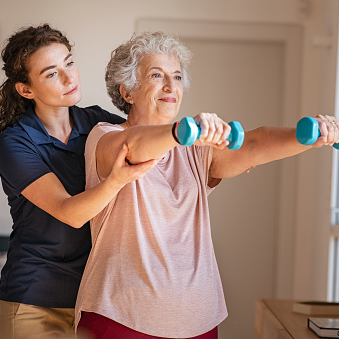
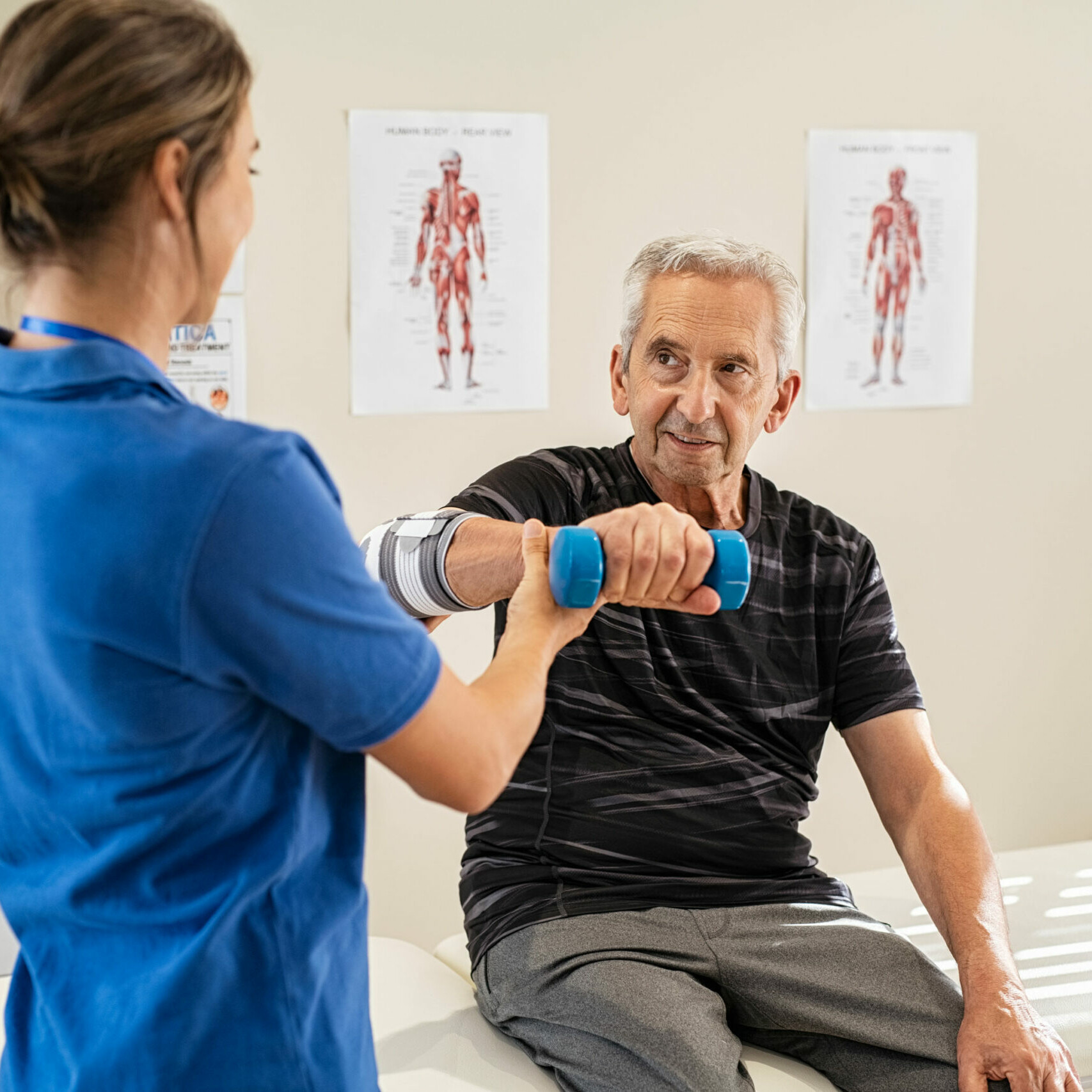
What makes for the best possible rehab experience with Physical Therapy, Occupational Therapy and Speech Therapy? There are many factors. I’ll cite five.

The first two have to do with the most important element: the therapists themselves.

  1. Compassionate Therapists. Our therapists have a genuine passion for their patients’ rehabilitation and are driven to see them reach the highest possible level of function. There is always a window of time in which rehabilitation must take place. As patients near the closing of that window, opportunity diminishes. Caring therapists plan well, work hard and find ways to motivate patients to achieve their goals.
  2. Competent Therapists. As necessary as it is that therapists have a caring heart, it is equally important that their hands (and minds) be well trained and skilled. Therapists gain much knowledge while earning their degrees and certifications, including various specialty certifications.  However, they must continue to learn and grow in order to implement evidence based techniques. Rehab team members need to have a hunger for personal and professional growth, and the rehab provider has to accommodate that hunger. When people are learning and growing, they are not only more equipped, but also more motivated to perform. So a high and ever rising standard of staff competence is essential to providing the best possible rehab experience.

The next two are related to the resources the gym has to offer.

  1. Gym Space. A large and spacious primary gym with two additional more private gyms, including an OT gym and a cardio gym to accommodate patient individual needs is the ideal arrangement. A spacious gym allows multiple therapists to treat their patients simultaneously. And large open spaces provide for safe and efficient gym.
  2. Equipment. Here’s a pretty good sample list of some of the equipment utilized by therapists to enhance patient outcomes: parallel bars, an ADL kitchen, short wave diathermy,  electrical stimulation, free weights, resistance bands, pulmonary care program, ultra sound, hydrocollator, paraffin, fluidotherapy, high low mat tables, orthotic devices, seating and positioning equipment, traction system, Scifit recumbent bikes, Omnicycle, Pnuemex anti-gravity walking machine, Saebo program, treadmill, standing frame, Treadwell, DME, adaptive equipment, rebounder, monofilament.  Obviously, the more equipment options a therapy team has access to, the closer the patient can come to the best possible rehab experience.

Finally, for in-patient rehabilitation, there has to be strong support systems in place.

  1. In-Patient Support. Even though patients often enter a skilled nursing facility to rehab from surgery, an injury or the exacerbation of a medical condition, they also require the support of other systems, like nutrition, social services, recreation, personal nursing care, a truly multidisciplinary approach to their experience. For example, a spacious room or suite in which to receive nursing care, enjoy good food, relax, visit with family and friends, read, watch TV and sleep provide an environment conducive to recovery. When patients aren’t in their actual treatment sessions, their experiences need to support their rehabilitation. If the patients are going to achieve their prior level of function and maximize their level of independence, it will involve the networking of the various disciplines. A multi-team approach is required, not only during the patients’ stay, but after their stay as well. It is the therapy team and the teams from the other disciplines working together that assures a safe transition to home or to the appropriate environment.


Share on Twitter
Feb
25

When a patient arrives at a rehabilitation center, the clinical team works with them to build goals that supports a safe discharge home.  These goals are broken down to manageable steps the patient works on each day, leading them closer to their desired outcome:  independence.  Likewise, Liberty Healthcare and Rehabilitation Services are in process of building goals as well, the kind made of bricks and mortar.  And while these goals are not of the clinical type, they do have the medical team and the patients they treat, in mind.  This team is turning a pasture nestled between Independence Blvd , Interstate 485 and Butler High School, into Royal Part Rehabilitation and Health Center, an 89,000 square foot skilled nursing facility.

The collision of interior design strategies with the reality of taking care of patients is seen among 16 million hits while conducting a Google search on healing environments.  The results ranged from the ideal wall colors in patient rooms, to a more clinical viewpoint on setting up the environment to minimize infections and falls.  Patients and their family are definite benefactors as healthcare settings work to align patient expectations, regulatory requirements and competitive pressure to provide a better experience.  Consumers have more options now from which to choose that provides comfort to the patient, provides the care they need and aligns with their life strategy.

According to Wikipedia, the goal of all healing environments is to engage patients in the conscious process of self-healing and spiritual growth.  It is the physical setting and organizational culture that supports patients and families through the stress imposed by illness.

According to “The Business Case for Creating a Healing Environment” (Malkin, 2003) written by healthcare design expert Jain Malkin and published by The Center for Health Design, the physical setting has the potential to be therapeutic if it achieves six elements:

  • Eliminating environment stressors like noise, glare, lack of privacy and poor air quality
  • Connecting patients to nature with views to the outdoors
  • Offering choices to enhance feelings of being in control
  • Providing opportunities for social support
  • Providing positive distraction
  • Engendering feelings of peace, hope, reflection and spiritual connection and provides opportunities for relaxation, education, humor and whimsy.

Slated to open in the Winter of 2013, Royal Park Rehabilitation and Health Center will offer what Malkin suggests in her article as the ideal therapeutic physical setting.  Patients can expect an environment that is bright and spacious and one that takes advantage of a quiet country setting with several indoor and outdoor gathering areas and spacious patient rooms, all with private bathrooms with showers and arranged in a neighborhood style.

What began as a pasture, nourishing plants and animals, will continue to evolve as a place of healing, nourishing patients as they achieve their goals.  Follow the evolution of Royal Park here and on Facebook at www.facebook.com/libertyhealthandrehab


Share on Twitter
Sep
20

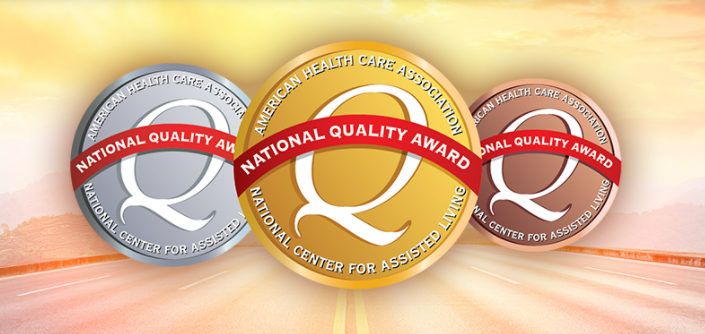
Sanford, NC – The American Health Care Association and National Center for Assisted Living (AHCA/NCAL) are pleased to announce the selection of Liberty Commons Nursing and Rehabilitation Center as a 2012 recipient of the Silver – Achievement in Quality for its outstanding performance in the health care profession. The competitive award highlights select facilities across the nation that serve as models of excellence in providing high-quality long term care.

“This award is a benchmark of distinction in the journey to providing high quality care,” said Governor Mark Parkinson, President and CEO of AHCA/NCAL. “The long term and post-acute care community applauds Liberty Commons Nursing and Rehabilitation Center on this great achievement.”

In an indication of a strengthening commitment to quality care in skilled nursing and post-acute care centers, the AHCA/NCAL National Quality Award Program saw success rates of applicants for the Silver award double from 8 percent to 17 percent. Liberty Commons of Sanford, NC was one of 52 facilities nationwide to receive the Silver-level award this year, and only one of 2 facilities in the State of North Carolina.

“The process of applying for and demonstrating quality at this level was very intense,” said Linda Andrews, Administrator of Liberty Commons, “but being able to show the level of commitment to this profession by our staff was rewarding. I am so proud of them.”

Implemented by AHCA/NCAL in 1996, the National Quality Award Program is centered on the criteria of the Baldrige Performance Excellence Program. The program assists providers of long term and post-acute care services in achieving their performance excellence goals.

The program has three levels: Bronze, Silver, and Gold. Facilities begin the quality improvement process at the Bronze level and must receive an award at each level before proceeding to the next. As a recipient of the Silver – Achievement in Quality award, Liberty Commons Nursing and Rehabilitation Center has demonstrated systematic advancements in quality, plans for continual improvement, and sustainable organizational goals. Liberty Commons may now move forward in developing approaches and achieving performance levels that meet the criteria required for the Gold – Excellence in Quality award, which requires them to address the Baldrige Health Care Criteria for Performance Excellence in its entirety.

“Receiving this award is evidence of the staff commitment and successful leadership at Liberty Commons Nursing and Rehab, and its ability to apply rigorous standards to operations and service,” says Chick Stepahin, Chair, AHCA/NCAL National Quality Award Board of Overseers. “Liberty Commons has been consistent in its performance and dedication to providing high-quality care.”

The awards are sponsored by AHCA/NCAL Associate Business Member My InnerView, a Web-based applied research and quality-management company that supports leaders across the entire assisted living, senior housing and skilled nursing profession with tools to measure, benchmark and improve performance. The award will be accepted by Mrs. Linda Andrews, Administrator during AHCA/NCAL’s 63rd Annual Convention and Exposition, October 7-10, 2012 in Tampa, FL.

Share on Twitter
Sep
04

The next generation of short term rehabilitation services are coming to Windsor, NC with construction of an 11,387 square-foot addition to Three Rivers Health and Rehabilitation Center.

The facility held a groundbreaking event on Wednesday, August 29, 2012 at 10:00 am. With construction to begin mid-September and scheduled to be complete in the spring of 2013, the addition will house 14 private suites and a therapy gym that will be 5 times the size of the existing gym.  In total, Three Rivers will offer 36 private and 44 semi-private suites, with private baths, 2,500 square feet of rehabilitation space with state of the art equipment to assist patients with their recovery from surgery, illness, or injury.

Patients and their family often look for a facility that offers home-like amenities that make their stay feel less “sterile.”  Three Rivers offers patients an environment that is their home away from home; with the addition, patients will be able to enjoy several indoor and outdoor gathering areas and spacious patient rooms.  The rehabilitation garden will allow a patient to “train” their body to walk on different terrain and provides a place of quiet reflection on their successes following their therapy session. “The kind of services provided within a skilled nursing facility has evolved to encompass short term rehabilitation.  We are thrilled to begin construction and to provide a rehab environment that is soothing and supports a safe discharge home.” Said Kim Kilday, Senior Director for Sales and Marketing with Liberty Healthcare and Rehabilitation Services.


Share on Twitter